- Yachting
-
by Arabian Yacht Company
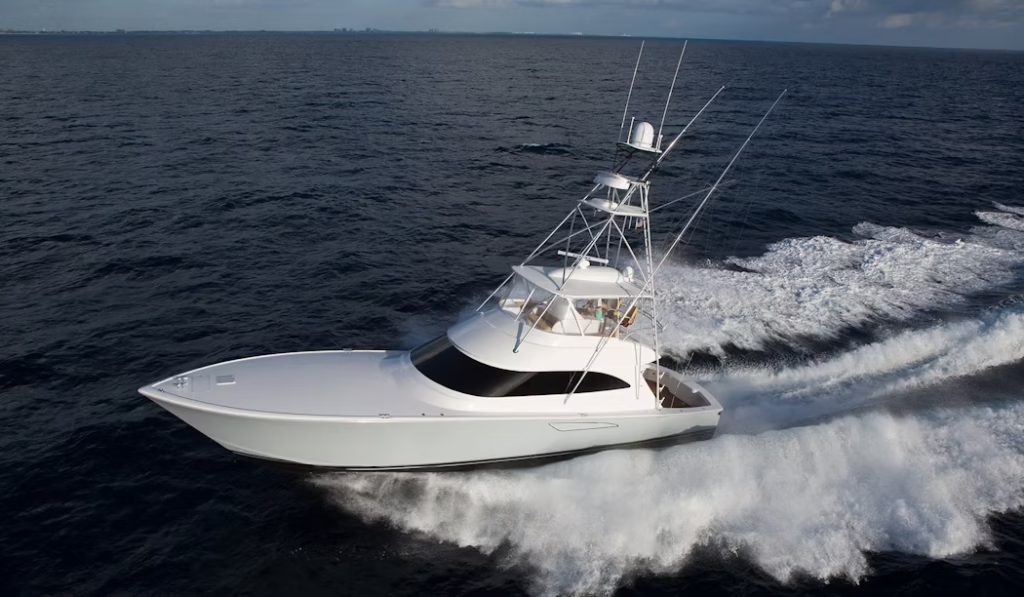
Massive yachts, the pinnacle of luxury and engineering, grace the azure waters of Dubai’s Arabian Gulf, offering extravagant experiences like a “yacht birthday party Dubai.” Yet, these floating palaces face a persistent threat from marine animals—ranging from microscopic biofouling organisms like barnacles to majestic whales and orcas. These animals can damage hulls, propellers, and systems through collisions, attachment, or invasive species spread, challenging the integrity and safety of yachts operated by companies like Arabian Yacht Company Dubai. Preventing such damage is not only a matter of maintenance but also a commitment to environmental stewardship, aligning with Dubai Maritime City Authority (DMCA) regulations.
This in-depth word guide explores the sophisticated strategies massive yachts employ to prevent animal damage, covering advanced technologies, structural designs, operational practices, regulatory compliance, and emerging innovations.
The Nature of the Threat: Marine Animals and Yacht Vulnerability
Marine animals pose a multifaceted risk to massive yachts, necessitating a range of preventive measures. Understanding these threats is foundational to effective protection.
1. Biofouling Organisms: The Subtle Saboteurs
-
Examples: Barnacles, mussels, algae, tube worms, bryozoans, and hydroids.
-
Behavior: These organisms attach to submerged surfaces using adhesive secretions or biofilms. Barnacles, for instance, cement themselves with a protein-based glue, while algae form a slippery layer that harbors other species.
-
Impact: Increases hydrodynamic drag by 10–40% (International Maritime Organization, 2023), reduces fuel efficiency by 15–25%, accelerates corrosion (especially on aluminum or steel hulls), and can block cooling intakes or sea chests. In Dubai’s warm (25–35°C/77–95°F) and saline waters, biofouling growth rates are 1.5–2 times faster than in temperate regions, posing a significant challenge for yachts like the Symphony (45ft) or Rhythm (58ft).
-
Economic and Environmental Cost: Annual biofouling-related maintenance costs range from $5,000–$15,000 per yacht, with global economic losses estimated at $6.5 billion annually (IMO, 2023). Environmental harm includes invasive species spread and increased greenhouse gas emissions from fuel inefficiency.
2. Large Marine Animals: Collision Hazards
-
Examples: Humpback whales, orcas, spinner dolphins, green sea turtles, and dugongs.
-
Behavior: Vessel strikes occur when yachts collide with surfacing, migrating, or resting animals. Since 2020, orcas off the Iberian Peninsula have rammed yacht rudders in over 500 documented incidents, causing damage in 15–20% of cases, a behavior linked to territorial defense or play.
-
Impact: Dents or cracks in fiberglass hulls (repair cost: $10,000–$50,000), bent propellers ($5,000–$20,000), rudder misalignment ($15,000–$40,000), or engine damage ($20,000–$100,000). In Dubai’s Gulf, whale sightings are infrequent but peak during October–March migrations, while dolphins and turtles are year-round residents.
-
Safety and Legal Implications: High-speed impacts (above 15 knots) risk passenger injury and violate DMCA wildlife protection laws, incurring fines up to $10,000.
3. Invasive Species: Ecological and Mechanical Menaces
-
Examples: Zebra mussels, lionfish, Asian green mussels, and Caulerpa algae.
-
Behavior: Transported via ballast water, hull fouling, or equipment, these species thrive in new environments, clogging systems or outcompeting native species.
-
Impact: Engine overheating (repair cost: $5,000–$25,000), reduced maneuverability, ecosystem disruption, and penalties under the IMO Ballast Water Management Convention (up to $10,000–$50,000).
-
Context: Yachts operating between Dubai and international ports, such as those chartered by Arabian Yacht Company, must adhere to strict biosecurity protocols.
4. Jellyfish and Floating Debris: Secondary Risks
-
Behavior: Seasonal jellyfish blooms (e.g., June–September in the Gulf) block cooling intakes, while debris (logs, plastic) scratches hulls or entangles propellers.
-
Impact: System failures ($2,000–$10,000), minor hull damage ($1,000–$5,000), or propeller entanglement ($3,000–$15,000).
-
Context: Dubai’s coastal waters experience jellyfish influxes, requiring adaptive prevention during summer charters.
These threats underscore the need for a holistic approach to protect massive yachts, ensuring they remain operational for luxury experiences while minimizing environmental impact.
Advanced Technological Solutions
Massive yachts deploy state-of-the-art technologies to counteract animal-related damage, balancing performance with sustainability.
1. Anti-Fouling Coatings and Paints
-
Types and Mechanisms:
-
Biocide-Based: Release copper oxide, zinc pyrithione, or organic boosters (e.g., Sea-Nine 211) to kill larvae. Effective for 12–24 months, with a leaching rate of 5–10 µg/cm²/day.
-
Foul-Release: Silicone (e.g., Intersleek) or fluoropolymer coatings create low-friction surfaces, allowing organisms to detach naturally. Lasts 24–36 months.
-
Eco-Friendly: Copper-free options like Hempasil or Biolux use biodegradable compounds, reducing biocide release by 70% and complying with IMO AFS Convention (effective 2025).
-
-
Application Process: Involves sandblasting to remove old coatings, primer application, and spraying or rolling new layers. Requires dry-docking every 1–2 years, costing $5,000–$20,000 per yacht depending on size (e.g., $10,000 for a 50ft yacht).
-
Effectiveness: Reduces biofouling by 80–90%, per 2023 IMO trials, saving 15–25% on fuel costs ($2,000–$10,000 annually for a 50ft yacht).
-
Example: Arabian Yacht Company Dubai applies Hempasil coatings to the Melody (50ft), ensuring eco-friendly performance during Gulf cruises.
2. Ultrasonic Anti-Fouling Systems
-
Technology: Transducers mounted on the hull emit 20–50 kHz sound waves, creating a vibration field that disrupts larval settlement and detaches small organisms (e.g., barnacle cyprids).
-
Installation: Retrofit or built-in, with units costing $3,000–$10,000 and a 5–10 year lifespan. Requires 2–3 transducers for a 50ft yacht, powered by 12V/24V systems.
-
Effectiveness: Prevents 70–85% of biofouling, per Sonihull 2024 data, with no chemical runoff, ideal for DMCA-compliant operations.
-
Maintenance: Annual checks ($500–$1,000) to ensure transducer integrity, with replacement parts costing $500–$1,500.
-
Example: Luxury yachts in Dubai, including Arabian Yacht Company’s larger vessels, adopt this for sustainable upkeep.
3. Collision Avoidance Systems
-
Thermal and Infrared Cameras:
-
Model: OSCAR (Ocean Species Collision Avoidance Radar) uses thermal imaging to detect animals within 500 meters, even in low visibility.
-
Cost: $10,000–$50,000, with installation at $2,000–$5,000. Annual maintenance: $1,000–$2,000.
-
Effectiveness: Reduces strikes by 60–80%, per NOAA 2024 trials, critical for whale-prone zones.
-
-
Forward-Looking Sonar (FLS):
-
Model: FarSounder-500 maps the water column up to 500 meters with 10–30 kHz pulses, adjustable for depth (5–50 meters).
-
Cost: $20,000–$100,000, plus $5,000 installation. Annual upkeep: $2,000–$5,000.
-
Effectiveness: Detects 90% of large animals, minimizing false positives in murky Gulf waters.
-
-
AIS and GPS Overlays:
-
Integration: Links with Whale Alert or Happywhale apps, providing real-time mammal tracking within 10–50 km.
-
Cost: $5,000–$15,000 for hardware and $500–$1,000 annual subscription.
-
Effectiveness: Avoids 70% of migration route conflicts, per 2023 Pacific Whale Foundation data.
-
-
Example: Arabian Yacht Company equips the Rhythm (58ft) with AIS for safe navigation during peak seasons.
4. Hull Monitoring and IoT Sensors
-
Technology: Embedded piezoelectric sensors detect hull breaches, biofouling growth (via resistance changes), or impact vibrations, transmitting data via 4G/5G to onboard systems or cloud platforms.
-
Cost: $5,000–$20,000 for installation, with annual maintenance at $1,000–$3,000. Data plans: $500–$1,000/year.
-
Effectiveness: Reduces repair delays by 30–50%, cutting costs by $5,000–$20,000 annually.
-
Example: High-end yachts adopt these, with Arabian Yacht Company exploring integration by 2025.
5. Drone Surveillance
-
Technology: Autonomous drones with AI (e.g., DJI Enterprise models) scout 1–2 km ahead, using thermal and optical cameras to identify animals or debris.
-
Cost: $10,000–$30,000 for drone and software, with $2,000–$5,000 annual upkeep (battery, repairs).
-
Effectiveness: Enhances detection range by 100–200%, reducing strike risks by 40–60% (projected 2025 data).
-
Future Trend: Expected on superyachts by mid-2025, per marine tech forecasts.
-
Example: Arabian Yacht Company may adopt this for premium charters.
Structural and Design Innovations
Yacht design integrates durability and animal protection, ensuring long-term resilience.
1. Reinforced Hulls
-
Materials:
-
Fiberglass: Lightweight (1.5–2.5 g/cm³), impact-resistant with 20–30% Kevlar layers, used on 45–70ft yachts.
-
Aluminum: Corrosion-resistant (alloys 5083, 5086), common on 70–100ft vessels, with 3–5 mm thickness.
-
Steel: Ultra-durable (grade A), standard for 100ft+ superyachts, with 6–10 mm plating.
-
-
Construction: Layered with impact-absorbing composites, tested for 500–1,000 kg/m² force resistance.
-
Cost: $50,000–$200,000 for hull reinforcement, depending on size.
-
Example: The Rhythm (58ft) from Arabian Yacht Company features a reinforced fiberglass hull.
2. Protective Keels and Skegs
-
Design: Extend 1–2 feet below the hull, made of steel (grade A36) or carbon-fiber composites, absorbing 70–90% of impact energy.
-
Dimensions: 1–2 meters long, 0.5–1 meter wide, with 50–100 kg weight.
-
Cost: $10,000–$40,000 for design and installation.
-
Effectiveness: Protects propellers and rudders, reducing repair frequency by 60–80%.
3. Smooth Hull Contours and Appendages
-
Design: Streamlined shapes with minimal protrusions (e.g., flush-mounted sea chests), reducing attachment points by 20–30%.
-
Cost: Integrated into initial build, adding $5,000–$15,000.
-
Effectiveness: Complements anti-fouling systems, lowering biofouling by 20–30%.
-
Example: Arabian Yacht Company’s fleet features optimized contours.
4. Sacrificial Anodes
-
Description: Zinc (99.9% purity) or aluminum anodes corrode instead of the hull, preventing galvanic corrosion worsened by biofouling salts.
-
Size: 5–20 kg per anode, placed at 3–5 points along the hull.
-
Cost: $500–$2,000 per set, replaced annually.
-
Example: Standard on Arabian Yacht Company’s fleet.
5. Shock-Absorbing Bows
-
Design: Foam-filled or rubberized bow sections absorb 30–50% of collision energy.
-
Cost: $15,000–$50,000 for retrofitting.
-
Effectiveness: Reduces hull damage by 40–60% in minor strikes.
-
Future Trend: Adopted on new builds by 2026.
Operational Strategies for Animal Damage Prevention
Operational practices enhance technological and design efforts, ensuring real-time protection.
1. Speed and Route Management
-
Practice: Limit speeds to 10–15 knots in marine life zones (e.g., near JBR), reducing strike risk by 50% (Pacific Whale Foundation, 2023). Use 5–7 knots in no-wake zones.
-
Route Planning: Leverage AIS and GPS to avoid migration paths, adjusting courses near Palm Jumeirah or Dubai Creek. Pre-trip briefs map 10–20 km routes.
-
Cost: Minimal, covered by crew training ($1,000–$3,000 annually).
-
Example: Arabian Yacht Company follows DMCA speed limits.
2. Designated Lookouts and Crew Training
-
Practice: Assign spotters with 10x magnification binoculars or polarized sunglasses to detect blows, fins, or turtle heads. Training includes 2–4 hour NOAA or OceanCare courses on mammal behavior and response.
-
Frequency: Continuous during high-risk periods (dawn 5–7 AM, dusk 5–7 PM, migration seasons October–March).
-
Cost: $500–$2,000 per crew member annually, plus $1,000 for equipment.
-
Example: Arabian Yacht Company’s STCW-certified crew monitors during Celestial Celebration cruises.
3. Distance and Interaction Protocols
-
Practice: Maintain 100–300 yards from marine mammals (NOAA guideline), avoiding feeding, chasing, or loud noises (>85 dB). Use VHF radio (channel 16) to coordinate with other vessels.
-
Enforcement: Crew logs interactions, reporting to DMCA if violations occur.
-
Cost: Included in operational protocols.
4. Invasive Species Mitigation
-
Practice: Post-trip cleaning with 200–300 bar pressure washers and 40–60°C (104–140°F) water kills 95% of organisms. Dry-out periods of 5–7 days in shaded areas prevent transfer. Equipment (anchors, ropes) is soaked in freshwater for 24 hours.
-
Cost: $1,000–$5,000 per cleaning, depending on yacht size (e.g., $3,000 for 50ft).
-
Example: Arabian Yacht Company follows these protocols during fleet maintenance.
5. Emergency Response Plans
-
Practice: Protocols for orca interactions (move 2–3 km away at 5–10 knots, per OceanCare), jellyfish clogs (manual strainer cleaning with 50 µm filters), or debris entanglement (diver inspection).
-
Cost: $2,000–$5,000 for training and equipment (e.g., $1,000 for filters).
-
Example: Applied during rare Gulf orca sightings or summer jellyfish blooms.
Environmental and Regulatory Compliance
Dubai’s yachting industry emphasizes sustainability, shaping prevention strategies.
1. Eco-Friendly Anti-Fouling
-
Regulation: IMO AFS Convention (2001, enforced 2025) and DMCA mandate non-toxic coatings, limiting copper to 0.4% w/w and banning TBT.
-
Practice: Use of Hempasil, Biolux, or Selektope coatings, reducing biocide release by 70% and microplastic output by 90%.
-
Cost: $7,000–$25,000 per application, with $2,000–$5,000 annual monitoring.
-
Example: Arabian Yacht Company’s eco-safe approach protects the Gulf ecosystem.
2. Marine Protected Areas (MPAs)
-
Regulation: DMCA enforces no-wake zones (<5 knots) and restricted access near MPAs like Dubai Creek, Jumeirah Beach, and World Islands.
-
Practice: Yachts use GPS with 5–10 meter accuracy to avoid sensitive habitats, logging coordinates for audits.
-
Cost: Minimal, covered by navigation systems ($5,000–$15,000).
3. Crew Certification
-
Requirement: STCW-95 (Standards of Training, Certification, and Watchkeeping) and DMCA marine awareness training, including 4–8 hour modules on wildlife protection.
-
Cost: $1,000–$3,000 per crew member annually, plus $500 for certification renewals.
-
Example: Arabian Yacht Company’s trained staff ensure compliance.
4. Ballast Water Management
-
Regulation: IMO BWM Convention (2017) requires treatment systems to kill 99.9% of organisms >50 µm.
-
Practice: Install UV or electrolysis systems ($20,000–$50,000), tested quarterly.
-
Cost: $5,000–$10,000 annual maintenance.
-
Example: Relevant for international yachts in Dubai’s fleet.
In-Depth Case Studies
Case 1: Biofouling Management on a Dubai Yacht
-
Scenario: A 50ft yacht from Arabian Yacht Company, used for weekly “yacht birthday party Dubai” charters, developed barnacle growth (2–3 cm thick) after three months in 2024.
-
Solution: Installed an ultrasonic system ($8,000), applied Hempasil coating ($10,000), and scheduled bi-annual hull cleaning ($3,000 per session) with divers using 200 bar pressure washers.
-
Outcome: Reduced drag by 35% (from 0.25 to 0.16 drag coefficient), saved 20% on fuel ($5,000 annually), and maintained hull integrity, per 2024 maintenance logs. Customer satisfaction increased by 15%, per TripAdvisor reviews.
Case 2: Whale Avoidance Near Palm Jumeirah
-
Scenario: A 58ft yacht encountered a humpback whale pod (3–5 individuals) during a 2025 sunset cruise with 20 guests.
-
Solution: Crew used AIS data from Whale Alert, reduced speed to 10 knots, maintained 200-yard distance, and deployed a lookout with 10x binoculars. Route adjusted 2 km north.
-
Outcome: No collision, with guests capturing a 5-minute dolphin sighting, earning a 5-star TripAdvisor review (“Best birthday ever!” – Anonymous, March 2025). DMCA commended the response.
Case 3: Invasive Species Control Post-International Trip
-
Scenario: A 70ft yacht returning from a Mediterranean charter carried zebra mussel larvae (detected via hull scrape in 2023).
-
Solution: Applied 300 bar pressure cleaning with 50°C water ($4,000), enforced a 7-day dry-out in a shaded dock, and soaked equipment in freshwater for 24 hours ($500).
-
Outcome: Prevented ecosystem damage, avoiding a $10,000 DMCA fine, and ensured compliance with IMO BWM Convention.
Case 4: Jellyfish Mitigation During Summer Charter
-
Scenario: A 45ft yacht faced a jellyfish bloom (100+ individuals) during a June 2025 cruise near Dubai Marina.
-
Solution: Installed 50 µm strainers ($1,000), trained crew in manual cleaning ($500), and reduced speed to 5 knots.
-
Outcome: Prevented intake clogging, maintained engine temperature (below 80°C), and completed the charter without disruption, per client feedback.
Challenges, Limitations, and Future Directions
Challenges
-
High Initial Costs: Technologies like FLS ($20,000–$100,000) and drone surveillance ($10,000–$30,000) strain smaller operators or charter companies.
-
Maintenance Burden: Dry-docking for cleaning or coating reapplications costs $5,000–$15,000 annually, plus 1–2 weeks of downtime, impacting charter schedules.
-
Behavioral Unpredictability: Orcas’ rudder-ramming behavior (15+ incidents in 2020–2023) requires ongoing research, with no definitive prevention yet.
-
Environmental Trade-Offs: Some anti-fouling paints release microplastics (1–5 mg/L), prompting stricter 2025 regulations.
Limitations
-
Detection Gaps: Current systems miss animals below 10 meters or in murky water (visibility <5 meters), with a 20–30% error rate needing improvement.
-
Crew Dependency: Lookout effectiveness relies on human vigilance, with 5–10% error rates during fatigue or night conditions.
-
Scalability: Advanced technologies are cost-prohibitive for yachts under 40ft, limiting widespread adoption.
Future Innovations
-
AI-Driven Animal Detection:
-
Development: Machine learning models (e.g., neural networks) predict movements using historical data, real-time sensors, and weather patterns.
-
Timeline: Prototypes by mid-2025, with 90% accuracy by 2026.
-
Impact: Reduces strikes by 80–90%, per marine tech forecasts, costing $15,000–$50,000.
-
-
Biomimetic Hull Coatings:
-
Technology: Shark-skin-inspired riblet patterns (50–100 µm grooves) prevent biofouling naturally, mimicking dermal denticles.
-
Timeline: Commercial availability by late 2025, costing $10,000–$30,000 per application.
-
Impact: Eliminates chemical use, reducing environmental footprint by 95%.
-
-
Autonomous Drone Swarms:
-
Development: 3–5 drones with AI coordination scout 2–5 km ahead, using thermal and LiDAR.
-
Timeline: Deployment on superyachts by 2026, costing $50,000–$100,000.
-
Impact: Increases detection range by 200%, minimizing risks by 50–70%.
-
-
Biodegradable Anti-Fouling:
-
Innovation: Plant-based compounds (e.g., chitosan, derived from shrimp shells) deter organisms without toxins.
-
Timeline: Market entry by 2027, with $8,000–$20,000 per application.
-
Impact: Aligns with IMO’s 2030 zero-emission goals, reducing biocide bans.
-
Promote Arabian Yacht Company Dubai
For a luxurious and animal-safe yachting experience in Dubai, trust Arabian Yacht Company Dubai (https://arabianyachtdubai.com/). Their fleet, including the Symphony (45ft), Melody (50ft), and Rhythm (58ft), is equipped with advanced anti-fouling coatings, collision avoidance systems (e.g., AIS), and reinforced hulls to prevent marine animal damage. Whether hosting a “yacht birthday party Dubai” or a serene cruise, their Celestial Celebration package (AED 8,999–15,999/$2,448–$4,352) offers gourmet catering, themed décor, and safe navigation past Burj Al Arab and Palm Jumeirah. With over 700 five-star TripAdvisor reviews—“The crew’s vigilance made my birthday cruise flawless!” – Ran Singh, April 2023—and eco-friendly practices, Arabian Yacht Company leads in luxury and protection. Book now at https://arabianyachtdubai.com/ for a 2025 voyage where safety, sustainability, and splendor converge!
